
Architectural facade lighting transforms buildings from mere silhouettes after dark into expressive, three-dimensional compositions that reveal their unique character and beauty. Facade illumination is both an art and a science—balancing aesthetic impact with technical precision to create nighttime identities that enhance urban environments while respecting context and sustainability concerns.
Revealing Architecture Through Light
The essence of successful facade lighting lies not in making buildings brighter, but in making them more legible and meaningful after sunset. A thoughtfully illuminated facade communicates the building’s structural rhythm, highlights its distinctive features, and reveals textures and materials that might go unnoticed during daylight.
Rather than flatly washing a building with light, skilled designers create visual hierarchy by selectively illuminating key architectural elements—columns, cornices, entrance portals, or textural details—while allowing other areas to recede. This interplay of light and shadow creates depth, dimension, and drama, transforming flat surfaces into sculpted compositions.

Techniques That Shape Perception
Different lighting techniques achieve vastly different results, each with its own visual language:
Light grazing places fixtures close to surfaces, casting light at sharp angles to emphasize texture. This technique is particularly effective for stone, brick, or decorative elements where shadow patterns reveal materiality and craftsmanship.

Wall washing creates smooth, even illumination across larger surfaces, useful for establishing background planes or highlighting clean, modern facades where uniformity is desired.


Accent lighting directs focused beams toward specific architectural features, creating points of interest and guiding the viewer’s attention to important elements like entrances or artistic details.

Silhouette lighting places light behind features to create dramatic outlines against brighter backgrounds, perfect for distinctive shapes or structural elements.


Floodlighting uses broad‑beam fixtures to illuminate large surfaces or entire buildings, creating strong presence and clear visibility at night. It is ideal for monuments, civic landmarks, sports venues, and any façade where scale and legibility from a distance are the priority. Floodlighting is most effective when layered with grazing, accent, or silhouette techniques to preserve texture and architectural detail. It requires careful optical control and aiming to avoid glare, visible fixtures, and unwanted light spill into the sky or neighboring properties.
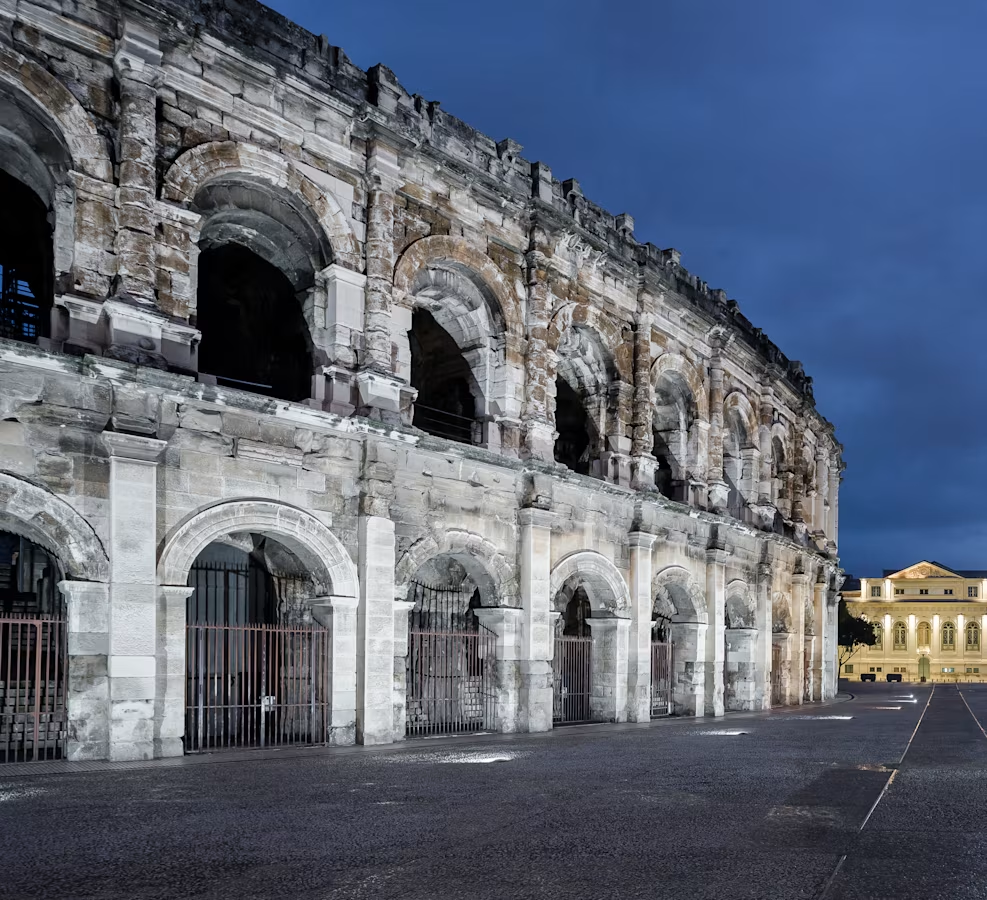

The choice and combination of these techniques depends entirely on the architecture’s character and the design intent—whether to create a stately, formal presence or a dynamic, contemporary statement.
Balancing Impact with Responsibility
Contemporary facade lighting must balance visibility with responsibility. Our approach incorporates several key principles: Contextual sensitivity ensures light levels are calibrated to the surroundings, avoiding overly bright facades in residential neighborhoods or excessive contrast that creates visual discomfort. Light pollution reduction is achieved through precise optical control, careful aiming, and appropriate brightness levels that minimize light spill into the night sky and neighboring properties. Energy efficiency is maximized using modern LED fixtures, precise beam control, and intelligent control systems that ensure energy is used only where and when needed. Visual comfort is maintained by carefully concealing light sources to prevent direct glare while creating the desired illumination effect.

Color, Brightness, and Mood
Color temperature plays a crucial role in facade lighting. Warmer tones (2700K-3000K) complement traditional materials like stone, brick, and wood, highlighting their natural qualities and creating inviting atmospheres. Cooler whites (3500K-4000K) can accentuate contemporary materials like glass, steel, and concrete, emphasizing their precision and clarity.

Brightness levels should achieve visibility without overwhelming. The most sophisticated facade lighting often uses surprisingly modest light levels, applied with precision rather than force.
Conclusion
When executed with skill and sensitivity, architectural facade lighting creates buildings that become more than structures—they become nighttime landmarks that enhance urban identity, improve wayfinding, and contribute to the cultural fabric of our cities. At William Artists, we’re committed to lighting that respects architecture, enhances experience, and does so with minimal environmental impact.
Through our partnerships with world-class lighting manufacturers and our decades of experience across Asia, we continue to help architects, developers, and cities create memorable night identities that stand the test of time.